



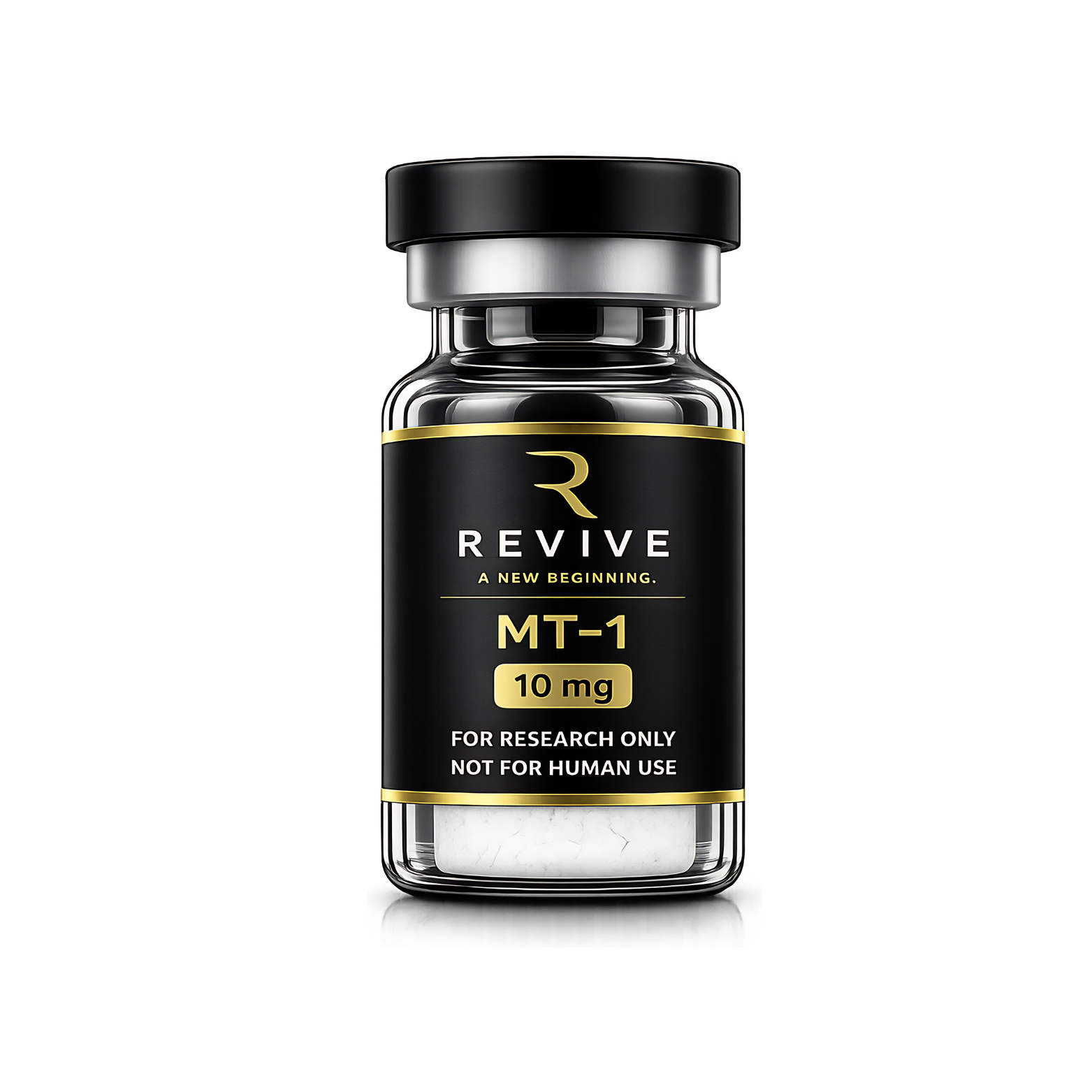
MT1 (melanotan 1, also known as afamelanotide) is a synthetic analog of alpha-melanotropic hormone (α-MSH). It acts as a selective agonist of the melanocortin type 1 receptor (MC1R), the main receptor involved in the production of skin pigments. More stable and with a longer-lasting effect than natural α-MSH, it is a reference molecule in research on melanogenesis and photoprotection.
Mechanism of action
MT1 replicates and prolongs natural α-MSH signaling through targeted activation:
- Activation of the MC1R receptor: Stimulates melanocytes in the epidermis to trigger melanin synthesis.
- Eumelanin production: Specifically promotes eumelanin, the dark pigment associated with the skin’s natural photoprotection.
- Photoprotection: Increased pigmentation is studied for its protective role against UV rays.
- MC1R selectivity: Unlike Melanotan 2, which has a broader spectrum, MT1 preferentially targets MC1R, resulting in a more pigmentation-focused action profile.
In its pharmaceutical form (afamelanotide/Scenesse), this molecule is studied and used in the treatment of erythropoietic protoporphyria (EPP), a severe photosensitivity disease, making it one of the most documented melanocortin analogues.
10 mg format — For whom?
The 10 mg format is designed for research protocols requiring intermediate to high concentrations or prolonged administration kinetics. It offers sufficient reserve for incremental titrations and excellent cost-effectiveness for the laboratory.
Technical specifications
- HPLC purity: ≥ 99%, certified by Janoshik Analytical (accredited independent laboratory)
- Certificate of Analysis (CA): Available per production batch
- Form: Freeze-dried – maximum stability at -20°C for 24 months
- Reconstitution: With bacteriostatic water (0.9% benzyl alcohol)
- Class: α-MSH analog ([Nle4, D-Phe7]-α-MSH), MC1R agonist
- Molecular weight: ∼ 1646 g/mol
Conservation and reconstitution
Store the lyophilized vial at -20°C before reconstitution. After adding 1 mL of bacteriostatic water, the solution has a precise concentration of 10 mg/mL. It remains stable for 4 weeks at a temperature between +2°C and +8°C, protected from light. Repeated freeze-thaw cycles after reconstitution should be strictly avoided. Handle under strict aseptic conditions for laboratory research.
Avis
Il n’y a pas encore d’avis.